The engine check lights on a Honda Scoopy is a sign that shouldn’t be ignored. This is because it can be a warning sign of a problem with the motorcycle, either in the engine system or components.
If not addressed promptly and appropriately, this problem can affect the motorcycle’s performance and cause serious damage. To understand more, it’s crucial to understand the causes and how to resolve them.
Causes of the Engine Check Lights Coming on a Scoopy
Before we get into the main discussion, let’s first understand the engine check. The check engine is part of the Electronic Control Unit (ECU) system on fuel-injected motorcycles.
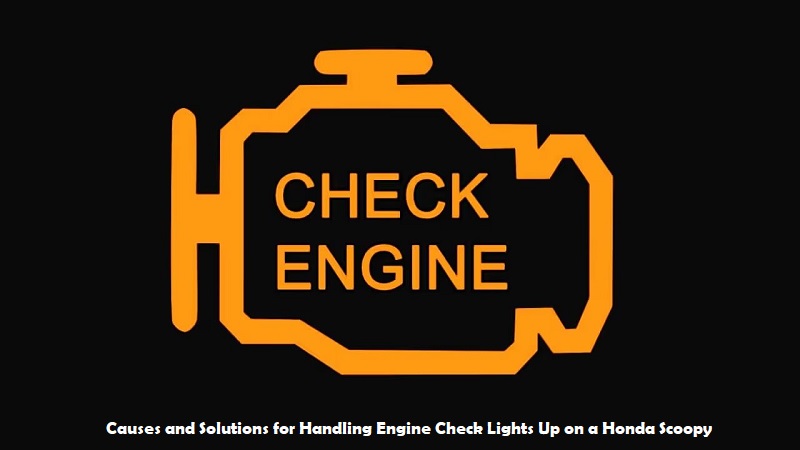
It’s usually located on the indicator panel near the speedometer and is marked with a small yellow or orange engine symbol. Its function is to provide information if there is damage or a problem with the motorcycle’s fuel-injected system.
On fuel-injected motorcycles like the Honda Scoopy, the check engine light will illuminate for about two seconds when the motorcycle is started.
This part of the self-diagnostic system to ensure all components are functioning properly. If the light goes out after a few seconds, there’s no problem.
However, if the light remains on or flashes continuously, it could be a sign of a problem that requires further attention. Below are common causes of the engine check lights on a Scoopy and their solutions.
-
Injection System Sensor Problems
The injection system on a Scoopy relies on several sensors, such as the oxygen sensor, MAP (Manifold Absolute Pressure), and temperature sensor.
If one of these sensors is damaged, the ECU will detect it and trigger the check engine light to illuminate.
The easy solution is to check the sensors using a diagnostic scanner or take the motorcycle to an authorized Honda repair shop. Typically, a technician will inspect and replace the damaged sensor.
Differences Between Each Injection Light Flash
There are two methods for interpreting the flashes in the MIL code: long flashes and short flashes. If there are 7 short flashes, the resulting MIL value is 7 (seven).
If there is one long flash plus two short flashes, the resulting MIL value is 12 (twelve). To understand system errors, there is usually a gap of about 3-5 seconds between one flash and the next.
-
Broken or Loose Cables
Furthermore, damage to the cables or connectors connected to the injection system can also cause the engine check lights to flash continuously. Broken or improperly connected cables can disrupt data flow to the ECU.
Just as with the previous method, be sure to check the cables and connectors in the injection system. If any cables are broken, reconnect them or replace them with new components. Ensure all connectors are properly seated and secure. Furthermore, the explanation on the Sejeworks Channel 1 YouTube channel for replacing broken cables requires caution. Be sure not to replace them with larger cables or fuses. If your motorcycle uses a 5-Ampere fuse, replace it with a similar or identical product. Forcing a component of a different size could cause a short circuit.
-
Damaged Fuel Pump
The fuel pump component functions to deliver gasoline to the combustion chamber. If the fuel pump isn’t working properly, fuel pressure becomes unstable, triggering the Check Engine light. If this is the cause, it’s mandatory to replace it.
-
Weak Battery Condition
A weak or damaged battery can also cause an abnormal engine check lights. This is because the injection system requires a stable power supply to function optimally.
One step we can take is to check the battery voltage. If the voltage is below standard (usually 12 volts when the motorcycle is off), it’s best to replace the battery.
-
Dirty Air or Fuel Filter
Additionally, a dirty or clogged filter can cause the Check Engine light to appear. This causes the sensor to detect an imbalance.
Therefore, it’s mandatory to clean or replace the air and fuel filters regularly, as per the motorcycle’s maintenance schedule.
By understanding the causes and solutions for a Scoopy’s engine check lights, you can maintain your motorcycle’s optimal condition and prevent further damage. Always use authorized Honda repair shops for maintenance and repairs. Technicians at authorized repair shops have specialized equipment and expertise to handle fuel-injected motorcycles.