Motorcycle rust forms due to oxidation, a natural chemical reaction that occurs when metal parts come into contact with air and water. Iron and steel slowly change, forming a rough, reddish layer that weakens the surface over time. Although many people link corrosion components with old bikes, this damage can happen to any motorcycle and may cause problems.
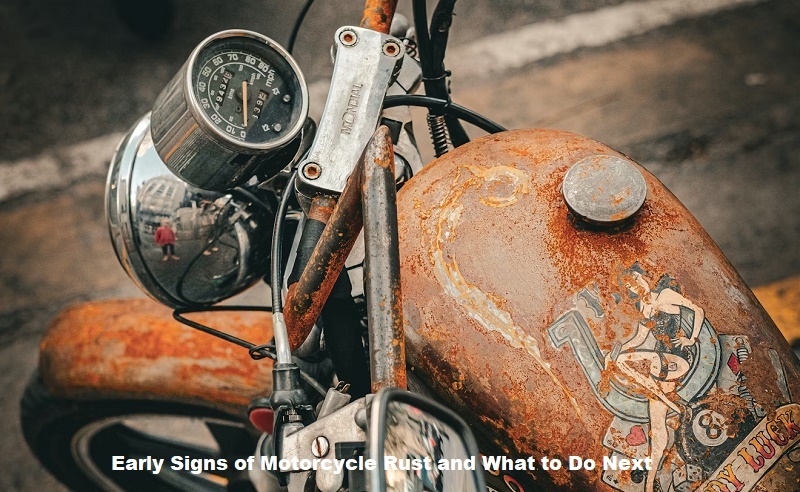
The First Warning Signs of Motorcycle Rust
Rust rarely appears all at once. Corrosion usually starts small before spreading wider. Regular checks during cleaning help catch trouble early. A careful look and a quick touch test often reveal problems before real damage begins. Attention should go to spots where motorcycle rust often shows up first, such as:
-
Fuel Tank Inside and Out
The tank deserves close attention. Areas near the fuel cap, weld lines, and the lower section tend to collect moisture. Water can also form inside when fuel levels stay low, creating condensation. This hidden dampness may cause rust flakes that block fuel lines and filters.
-
Exhaust Pipes and Muffler
Heat and water meet here, making rust more likely to happen. Headers, pipes, and mufflers should be checked after rainy rides. Faded color or dull patches often signal the earliest stage of corrosion.
-
Chain
Chains face dirt, water, and constant motion. Reddish marks on links or rollers point to rust forming. A corroded chain sounds rough, wears quickly, and may fail under stress.
-
Bolts and Fasteners
Small metal parts rust fast. Bolt heads on engines, brakes, and axles often show white, chalky buildup. That crust is usually the first warning sign.
-
Frame and Chassis
The main structure needs careful inspection. Joints, seams, and tight spaces trap grime and moisture. Paint bubbles or dark stains beneath the coating suggest serious trouble.
Quick Fixes for Early Rust
Fast action can stop corrosion before it spreads. The main goal involves removing rust and sealing the metal right away. Here is the correct way to fix corrosion in motorcycle before it spreads:
- Wash the affected part using mild soap or a motorcycle cleaner.
- Small tools or brushes help reach tight areas like chains.
- Dry everything fully with a soft cloth since leftover moisture invites new corrosion.
- Fine steel wool or special rust pads remove corrosion without harming paint or chrome.
- Bare metal must be covered with a protective layer after cleaning.
- Painted areas benefit from touch-up paint once clean and dry.
- Wax adds another water-resistant layer.
- Chains need fresh lubricant after cleaning.
Ceramic Coatings vs Traditional Rustproof Paints for Motorcycles
Protecting a motorcycle starts with knowing what each type of coating is meant to do. Ceramic coatings and rustproof paints do not serve the same purpose, but they can work well together.
Ceramic layers focus on keeping painted panels glossy and clean. While rustproof paints are created to shield metal parts from damage caused by moisture and air. Especially in damp climates.
Ceramic coatings help paint look brighter by adding shine and guarding against sunlight. Water and dust slide off more easily, which makes cleaning faster. Despite these benefits, this type of coating does not stop rust and cannot fully protect bare metal, even when exposed to salty air.
Rustproof paints take a different approach by forming a barrier on metal frames, bolts, and exhaust parts. These products slow down corrosion effectively. Though fresh layers may be needed every few months.
How to Prevent Rust in a Motorcycle?
Based on @FreddieDobbs’ experience shared on his YouTube channel, regular motorcycle maintenance can completely prevent the risk of rust. Even when riding year-round in harsh winter conditions. Consistent use of rust protective spray with PTFE that protects and lubricates metal surfaces also helps a lot. By spraying all accessible areas, especially hidden and underside parts. Then, repeating the process monthly or more often in winter, the motorcycle stays protected.
Understanding how motorcycle rust forms and learning how to stop it keeps metal strong and safe. Careful habits protect appearance, performance, and value. Steady attention remains the most powerful tool in motorcycle maintenance. /Fitri